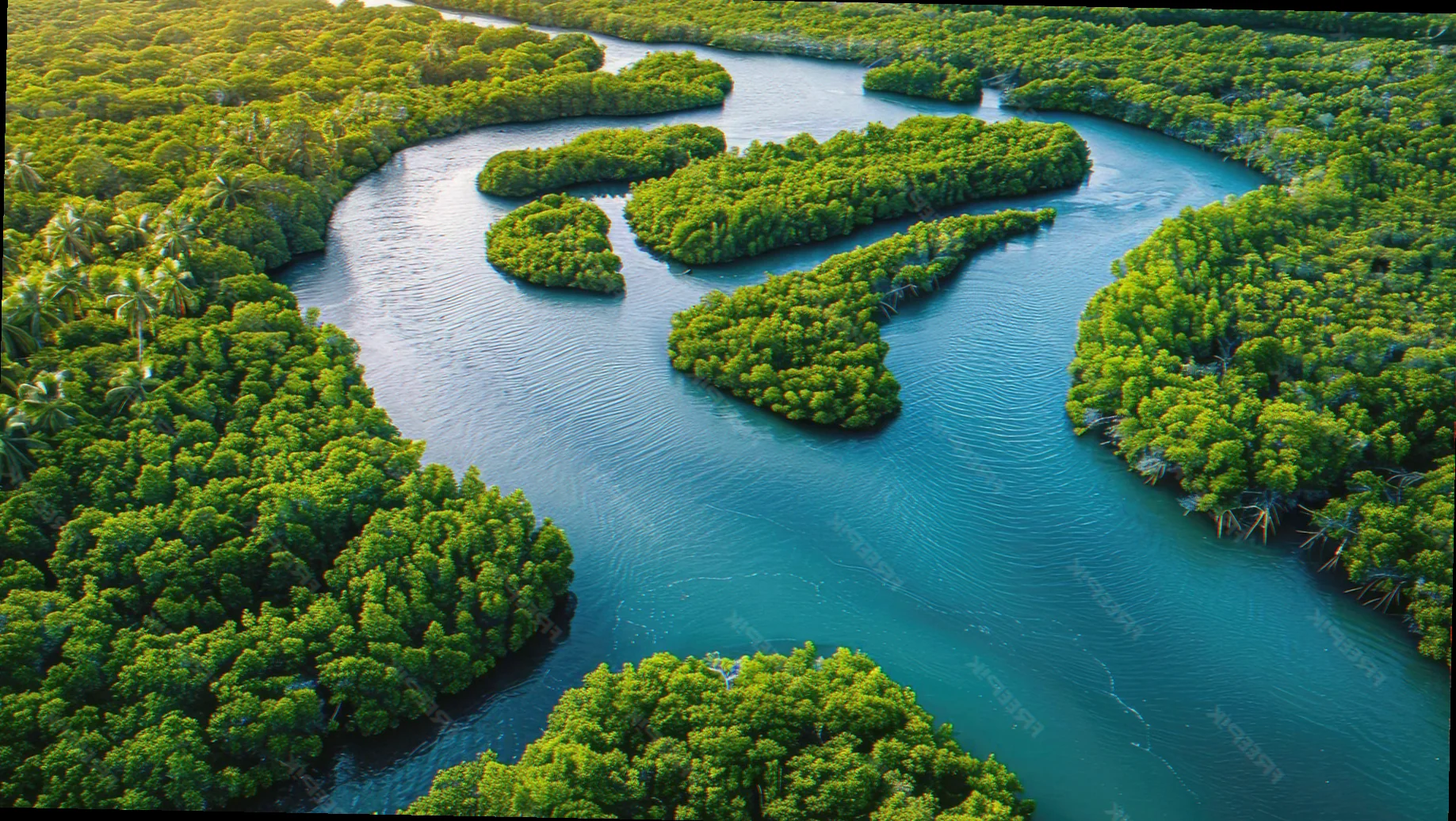
Ecological significance: Estuarine ecosystems in the King George River are vital primary producers, forming the base of a complex estuarine food web. Their extensive root systems stabilise shorelines and trap sediment, while their foliage provides crucial habitat and nursery grounds for countless marine and terrestrial species. The disappearance of these mangrove forests would lead to a catastrophic collapse of local fisheries, a significant reduction in biodiversity, and increased coastal erosion, impacting the broader Australian marine ecosystem.
Species Profile
| Attribute | Data |
|---|---|
| Scientific name | *Avicennia marina* (Forskål) Vierh. |
| Trophic level | Primary producer |
| Population estimate | While specific population estimates for the King George River mangrove forests are not readily available, the species (*Avicennia marina*) is considered widespread and abundant in suitable Australian habitats. However, localized assessments are crucial for understanding regional dynamics. |
| Native range | Australia (all mainland states and Tasmania), New Zealand, Papua New Guinea, Indonesia, Malaysia, Philippines, India, East Africa, and the Middle East. |
| EPBC Act status | Not listed (as of current Commonwealth legislation). |
Position in the Food Web
- Prey species: Mangrove leaves and detritus are the primary food source for a vast array of invertebrates, including various species of gastropods (e.g., mud snails), crustaceans (e.g., fiddler crabs), and polychaete worms. These invertebrates are subsequently consumed by larger organisms. Mangrove propagules (seeds) are also consumed by some herbivorous fish and insects.
- Predators: While *Avicennia marina* itself is a plant and not directly preyed upon in the traditional sense by large vertebrate predators, its associated fauna are subject to predation. For instance, the juvenile fish that shelter within the mangrove roots are preyed upon by larger predatory fish such as the Barramundi (*Lates calcarifer*). Birds also consume insects and small invertebrates found within the mangrove canopy.
- Competitors: In some instances, other mangrove species, where present, may compete for space and light. However, *Avicennia marina* often dominates in the more seaward or exposed positions within an estuarine system. Competition can also arise from invasive seagrasses or algal blooms that might smother young mangrove seedlings.
- Symbiotic partners: A key symbiotic relationship exists with various microbial communities (bacteria and fungi) that colonise the decaying organic matter within the mangroves, facilitating decomposition. Furthermore, many epiphytic organisms, such as algae and lichens, grow on the bark and branches, demonstrating a commensal relationship where the mangrove provides a substrate and the epiphyte benefits without significantly harming the host.
- Keystone role: *Avicennia marina* in the King George River estuary acts as an umbrella species. Its protection indirectly safeguards numerous other species that rely on the mangrove habitat for survival. It also plays a significant role in nutrient cycling and sediment stabilisation, which benefits the entire estuarine and coastal ecosystem.
Habitat Requirements and Microhabitat Use
*Avicennia marina* thrives in intertidal zones of estuaries, sheltered bays, and along coastlines where it can tolerate a wide range of salinity, from near freshwater to hypersaline conditions. In the King George River, these mangroves are typically found on fine, silty, or muddy substrates, often with a high organic content. They are well-adapted to anaerobic conditions due to their pneumatophores (aerial roots) that facilitate gas exchange. This species is a dominant component of mangrove forests within the Kimberley region of Western Australia, an area characterised by its monsoon climate and dramatic tidal fluctuations. It can be found in ecosystems such as the Dampier Peninsula coastal plains and the broader Kimberley coastal plains bioregions.
Reproductive Strategy and Population Dynamics
*Avicennia marina* exhibits an r-selected reproductive strategy, producing a large number of propagules (viviparous seeds) that are dispersed by tidal currents. Breeding is primarily triggered by favourable environmental conditions, including adequate rainfall following dry periods and optimal water temperatures. Juvenile survival is highly variable and depends on factors such as the availability of suitable substrate for establishment, predation pressure from herbivorous fish and invertebrates, and the intensity of wave action. Population growth is primarily limited by the availability of suitable intertidal habitat and the success of propagule dispersal and germination. Extreme weather events, such as cyclones, can also cause significant mortality, resetting local population dynamics.
Threats and Vulnerability Analysis
- Introduced species pressure: While currently not a major documented threat in the remote King George River, invasive species like the introduced Asian paddle crab (*Charybdis japonica*) could potentially outcompete native crab species crucial for mangrove ecosystem function.
- Land-use change: In adjacent areas of the Kimberley, proposed industrial developments and increased coastal tourism pose a risk of habitat degradation through dredging, reclamation, and pollution. While the King George River itself is relatively pristine, increased shipping traffic or resource extraction in the broader region could lead to indirect impacts.
- Climate projections: By 2050, rising sea levels may lead to landward migration of mangrove forests where topography allows. However, in areas with steep hinterlands or coastal development, this migration may be blocked, leading to mangrove retreat and loss. Increased intensity of tropical cyclones could also cause physical damage to the mangrove stands. Altered rainfall patterns, particularly more intense wet seasons, could also influence salinity regimes and seedling establishment.
- Disease: While *Avicennia marina* is generally resilient, localized outbreaks of fungal pathogens or infestations by wood-boring insects could impact individual trees or small stands, particularly if stressed by other environmental factors.
Recovery Actions and Research Gaps
Currently, there are no specific recovery plans solely for the King George River mangrove forests. However, broader regional management plans for the Kimberley coastline and marine parks aim to protect these critical habitats. Research is needed to better understand the specific tidal inundation patterns and salinity tolerances of *Avicennia marina* in the King George River system under future climate scenarios. A critical data gap is the lack of detailed monitoring of propagule production, dispersal success, and seedling recruitment rates, which are essential for predicting the long-term resilience of these mangrove populations. Furthermore, fine-scale mapping of the current distribution and health of the King George River mangrove forests is crucial.
Ecological FAQ
Why is estuarine ecosystems king george river mangrove forests important to its ecosystem?
The King George River mangrove forests are ecologically vital as they form the foundation of a highly productive estuarine ecosystem. Their intricate root systems trap sediments, preventing coastal erosion and creating stable substrates for a multitude of marine life. They act as essential nursery grounds for juvenile fish and crustaceans, providing shelter and food, which directly supports local fisheries. The decomposition of mangrove leaves and wood fuels a detrital food web, supporting a diverse community of invertebrates that are in turn a food source for larger animals. Essentially, they are the living architects of a healthy estuary.
How has the estuarine ecosystems king george river mangrove forests population changed over the last 50 years?
Given the remote and relatively undisturbed nature of the King George River, it is likely that the *Avicennia marina* mangrove forests have remained relatively stable over the last 50 years, with minor fluctuations driven by natural processes like seasonal rainfall and tidal influences. Unlike more developed coastlines, direct anthropogenic impacts such as land clearing or significant pollution have been minimal. However, subtle changes in salinity regimes due to altered rainfall patterns or potential impacts from increased sediment load from upstream land use changes could have occurred. Without dedicated long-term monitoring data, it is difficult to provide precise figures, but the general assumption is one of ecological resilience in this protected area.
What can individuals do to support estuarine ecosystems king george river mangrove forests conservation?
While direct intervention in such a remote area is limited for most individuals, supporting the conservation of the King George River mangrove forests can be achieved through broader actions. This includes supporting organisations that advocate for strong marine protected areas and robust environmental legislation in Western Australia. Educating oneself and others about the ecological importance of mangrove ecosystems is crucial. Furthermore, making sustainable choices regarding seafood consumption can indirectly benefit these habitats by supporting fisheries management that considers the role of nursery grounds. Reducing plastic waste and pollution that can eventually find its way into marine environments also plays a role in maintaining the health of these coastal ecosystems.