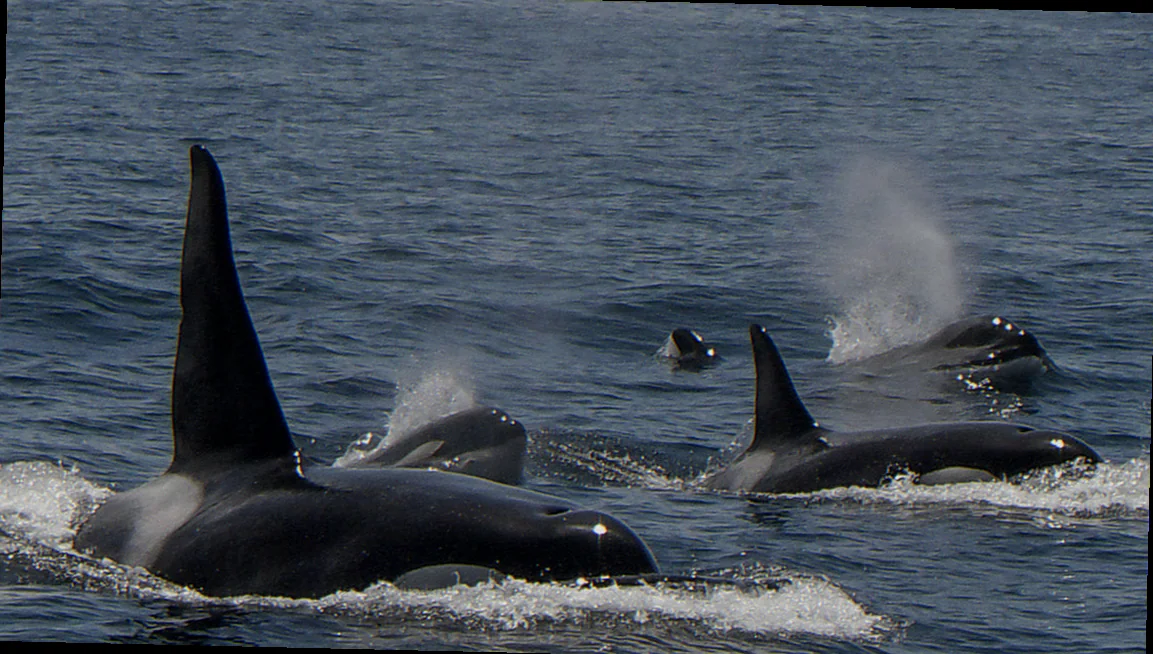
Imagine a wild predator, an apex killer of the deep, swimming to a human settlement to alert them that a hunt is about to begin. For over a century in Twofold Bay, New South Wales, a pod of orcas led by a male known as "Old Tom" would breach and slap their tails to summon local whalers, herding baleen whales into the shallows in exchange for a share of the catch. This extraordinary interspecies partnership, known as the "Law of the Tongue," remains one of the most documented and baffling examples of cooperative hunting between humans and wild cetaceans in history.
Natural History Overview
| Category | Information |
|---|---|
| Scientific name | Orcinus orca |
| Common name variants | Killer Whale, Orca, Beowanna (Thaua name) |
| First described (year) | 1758 by Carl Linnaeus |
| Size and weight | Up to 9.8 metres; weight exceeding 6,000 kilograms |
| Longevity record | Estimated 80-90 years (females); 50-60 years (males) |
What Makes twofold bay orca sightings and behaviour Extraordinary
The most counter-intuitive aspect of Twofold Bay orca behaviour is the historical "Law of the Tongue." While orcas are known for complex group hunting, the Eden pod displayed a level of "interspecies altruism" that bordered on the strategic. When a humpback or right whale entered the bay, the orcas would divide into two groups: one would harass the whale to prevent its escape, while another would swim to the Davidson family whaling station and perform "flop-tailing"-rhythmically slapping the water to alert the humans. This was not a one-off event but a consistent, multi-generational behaviour that lasted from the 1840s until 1930. The "reward" for the orcas was the "Law of the Tongue," where the whalers would leave the carcass moored for 24 hours to allow the orcas to eat the lips and tongue-their favourite delicacies-before the humans harvested the blubber and bone. This level of planned, delayed gratification in a wild animal suggests a sophisticated understanding of human reliability and social contract.
Aboriginal and Torres Strait Islander Perspectives
Long before European whalers arrived in Eden, the Thaua people of the Yuin nation maintained a deep spiritual and practical relationship with the orcas, whom they called Beowanna. For the Thaua, the orcas were not merely animals but "brothers" or "ancestors" reincarnated from the sea. This relationship was central to their land and sea management; Thaua hunters would sing to the orcas, calling them into the bay to assist in hunts. Unlike the later commercial whaling, this was a sustainable practice rooted in mutual respect. Traditional lore suggests that when a Thaua leader died, their spirit would take the form of a Beowanna, continuing to protect and provide for the community. The Davidson family, who are often credited with the "discovery" of this partnership, actually succeeded because they employed Thaua men who understood the orcas' signals and treated the animals as kin rather than competitors. This cultural continuity is a testament to the sophisticated ecological knowledge held by Indigenous Australians for millennia.
Recent Scientific Discoveries (last 20 years)
- Genetic Isolation (2014): Genomic studies have suggested that the orcas found in Australian waters may belong to distinct "ecotypes" that do not interbreed with Antarctic populations, suggesting that the Twofold Bay orcas were part of a unique Australasian lineage with its own cultural traditions.
- Great White Predation (2017): Researchers off the coast of South Australia and New South Wales documented orcas specifically targeting the livers of Great White Sharks. This "surgical" precision in hunting demonstrates that the orcas of the Australian shelf pass down highly specific, niche hunting techniques through cultural learning, much like the "Law of the Tongue."
- Ongoing Research: Modern marine biologists are currently using passive acoustic monitoring in Twofold Bay to determine if the descendants of Old Tom's pod still frequent the area, investigating whether "vocal dialects" recorded in the early 20th century persist in modern populations.
Life History and Ecology
- Diet: Primarily humpback whale calves, minke whales, squid, and high-energy organs of large sharks.
- Habitat: Coastal shelf breaks and deep-water canyons off Eden and the Sapphire Coast, often following the East Australian Current.
- Breeding: Highly social; females give birth to a single calf every 3 to 10 years after a 15-18 month gestation period.
- Lifespan: In the wild, females often live past menopause (one of the few species to do so), reaching 80+ years, while males typically live 30 to 50 years.
- Movement: Highly migratory; individual orcas sighted in Twofold Bay have been tracked moving over 1,000 km north toward Queensland waters in a single season.
Conservation Status and Future Outlook
While the orca is listed as "Data Deficient" by the IUCN globally, in Australia, they are protected under the EPBC Act as a migratory marine species. The primary drivers of concern for the modern descendants of the Twofold Bay pods are noise pollution from shipping and seismic testing, which interferes with their echolocation. However, an optimistic development is the rise of citizen science; the "Eden Whale Festival" and local sighting networks have provided researchers with thousands of data points, confirming that orcas still frequently visit Twofold Bay, though they no longer "work" with humans. The challenge remains ensuring that increased boat traffic does not disrupt the very behaviours that made this population legendary.
Myth-Busting: What People Get Wrong About twofold bay orca sightings and behaviour
Myth 1: Old Tom and his pod were "tame" or "trained" by the whalers. Truth: There is no evidence the orcas were ever fed or coerced; the partnership was a purely voluntary "commensal" relationship where the orcas initiated the contact for their own benefit.
Myth 2: Orcas are aggressive towards humans in the wild. Truth: Despite their fearsome reputation as "Killer Whales," there has never been a recorded fatal attack on a human by a wild orca. In Twofold Bay, there are historical accounts of orcas actually protecting whalers who had fallen overboard from sharks.
Questions People Ask
Is twofold bay orca sightings and behaviour found only in Australia?
While the species *Orcinus orca* is found in every ocean on Earth, the specific "Law of the Tongue" behaviour recorded in Twofold Bay is unique to this location. Nowhere else on the planet has such a long-term, documented cooperative hunting relationship between wild orcas and humans been observed.
Has twofold bay orca sightings and behaviour ever been kept in captivity?
Orcas have been kept in various marine parks globally, including Sea World on the Gold Coast in the past. However, the specific pod from Twofold Bay was never captured. Today, public sentiment and Australian regulations have shifted heavily against the captive display of these highly intelligent and wide-ranging mammals.
How does twofold bay orca sightings and behaviour cope with Australian droughts and fires?
While they live in the ocean, orcas are indirectly affected by terrestrial events. Massive bushfires, like the 2019-2020 Black Summer, lead to significant ash and nutrient runoff into bays like Twofold Bay. This can cause temporary algal blooms or changes in water turbidity, which may affect the distribution of the fish and seals that orcas prey upon, forcing them to move further offshore to find clear hunting grounds.