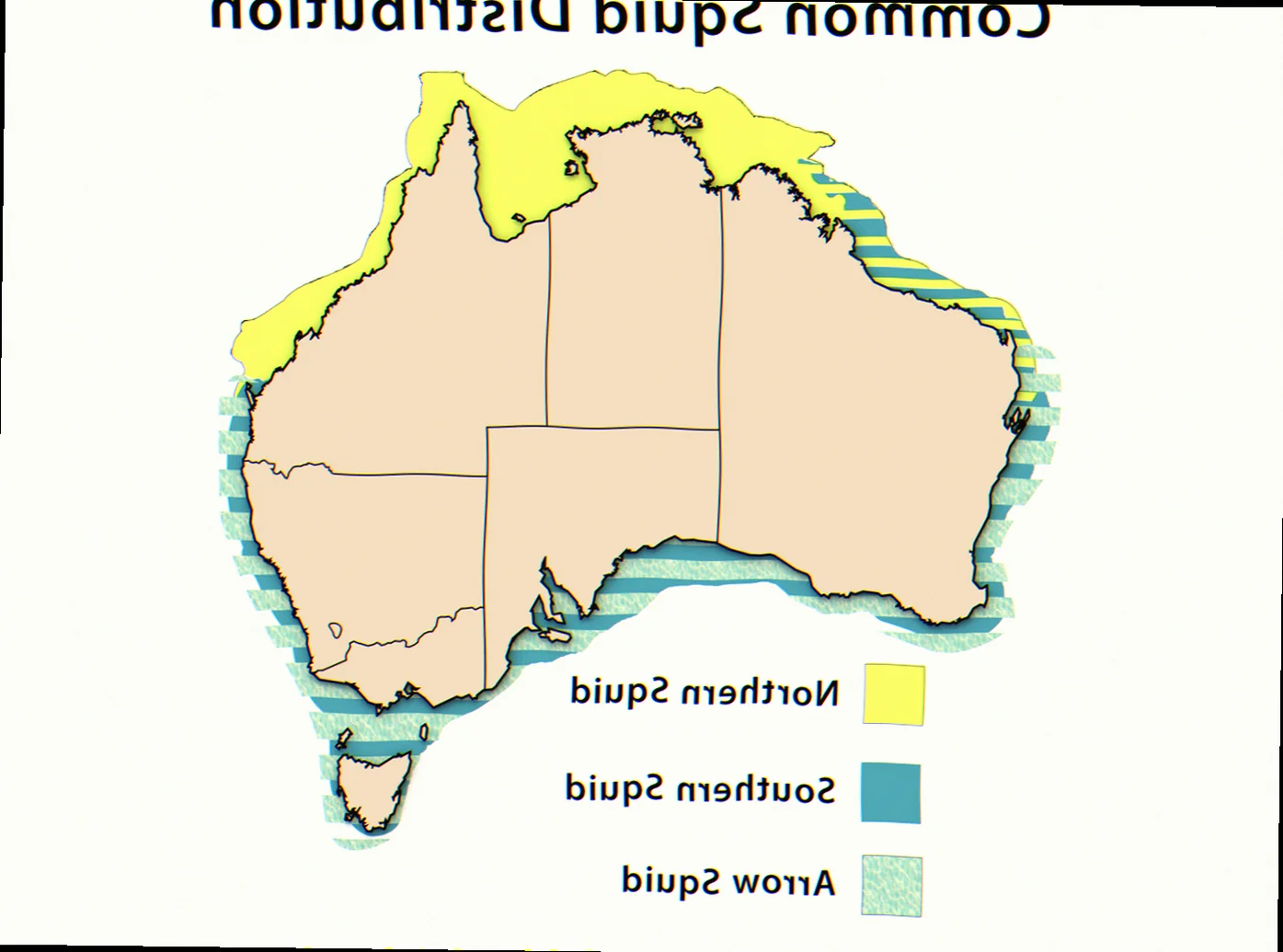
Ecological significance: Deep sea squid, particularly those found in Australian waters, occupy a crucial mid-trophic level in the vast abyss. They serve as a vital link, consuming smaller zooplankton and crustaceans, thereby transferring energy up the food web. Their disappearance would likely lead to a cascade of effects, potentially impacting populations of their own predators, such as larger fish and marine mammals, and altering the delicate balance of deep-sea ecosystems. The sheer biomass they represent also plays a significant role in nutrient cycling in these otherwise food-scarce environments.
Species Profile
| Attribute | Data |
|---|---|
| Scientific name | *Not a single species; refers to diverse assemblage of cephalopods* |
| Trophic level | Omnivore/Carnivore (depending on species) |
| Population estimate | Highly variable, with some species estimated in the millions across global oceans. Specific Australian deep-sea populations are largely unquantified. |
| Native range | Circumglobal, with significant distribution within Australian waters, including the Tasman Sea, Great Australian Bight, and waters off Western Australia and Queensland. |
| EPBC Act status | Not listed as a single entity; individual species may have specific assessments. |
Position in the Food Web
- Prey species: Primarily consume zooplankton (e.g., copepods, krill), small crustaceans (e.g., amphipods, decapods), and smaller fish. Hunting methods vary, including active pursuit using jet propulsion and ambush tactics using their excellent camouflage. Some species also engage in detritivory, consuming marine snow.
- Predators: Major predators include large deep-sea fish such as the rattails (*Macrouridae* family), grenadiers, and barracouta (*Thyrsites atun*). Larger predatory squid and toothed whales, including sperm whales (*Physeter macrocephalus*), are also significant predators.
- Competitors: Compete with other mesopelagic and bathyal organisms for zooplankton and small nekton. This includes various species of deep-sea fish, shrimp, and other cephalopods. The competitive landscape is complex and depends on the specific depth and location.
- Symbiotic partners: Some deep-sea squid host bioluminescent bacteria in specialized organs (photophores). These bacteria can provide light for communication, camouflage (counter-illumination), or prey attraction, while the squid provides a safe environment and nutrients for the bacteria. This is a form of mutualism.
- Keystone role: While not typically classified as a single keystone species due to their diversity, the collective biomass and trophic position of deep-sea squid can be considered functionally important. They can act as indicator species for the health of deep-sea ecosystems due to their sensitivity to environmental changes.
Habitat Requirements and Microhabitat Use
Deep-sea squid in Australian waters inhabit a range of environments from the mesopelagic zone (200-1000m) to the abyssal plains (4000-6000m). Their habitat requirements are generally dictated by water temperature, pressure, and the availability of food. They are found across various Australian marine bioregions, including the Northwest Shelf, Bonaparte Coast, Central Eastern Australian Shelf, and the largely unexplored Southern Ocean abyssal plains. Specific substrate preferences are less defined for pelagic species, but demersal species may associate with soft sediments or seamounts for shelter and prey aggregation. The presence of sufficient dissolved oxygen and specific prey densities are critical microhabitat selection factors.
Reproductive Strategy and Population Dynamics
Deep-sea squid generally exhibit an r-selected reproductive strategy, characterised by producing a large number of small eggs and rapid maturation. Breeding triggers are poorly understood but are likely influenced by seasonal upwelling events that increase food availability, or specific lunar or photoperiod cues. Juvenile survival rates are presumed to be low due to high predation pressure and the challenges of finding sufficient food in the deep sea. Population growth is often limited by the availability of prey, predation rates, and the energetic costs of reproduction. Fluctuations in population size can be significant and are often linked to broader oceanicographic cycles.
Threats and Vulnerability Analysis
- Introduced species pressure: While direct impacts of introduced species are less prevalent in the deep sea compared to coastal environments, changes in surface or mid-water ecosystems due to invasive species could indirectly affect food availability for deep-sea squid.
- Land-use change: Runoff from terrestrial agriculture and coastal development can lead to increased nutrient loading and sedimentation in the water column, potentially altering the food web structure and impacting zooplankton communities that form the base of the deep-sea squid diet.
- Climate projections: By 2050, ocean warming is projected to affect the distribution and abundance of zooplankton, the primary food source for many deep-sea squid. Changes in ocean currents and oxygen minimum zones due to climate change could also alter their habitat suitability, potentially leading to range contractions or shifts. Increased ocean acidification may also impact the calcification of prey species.
- Disease: While poorly studied, deep-sea squid are susceptible to various parasites and pathogens. Changes in water temperature and quality due to climate change could exacerbate disease outbreaks, impacting population health.
Recovery Actions and Research Gaps
Specific recovery plans for broad categories of deep-sea squid are rare. Conservation efforts largely focus on broader marine protected areas (MPAs) that encompass deep-sea habitats, and sustainable fisheries management that minimises bycatch of non-target deep-sea organisms. There are no widespread captive breeding programmes or translocation projects for these species. A critical data gap that researchers still need to fill is understanding the specific life cycles, population dynamics, and habitat dependencies of the numerous undescribed or poorly understood deep-sea squid species found in Australian waters. Furthermore, robust methods for estimating population sizes in the vast and inaccessible deep sea are urgently needed.
Ecological FAQ
Why is deep sea squid distribution australia important to its ecosystem?
Deep-sea squid, as a collective group, are vital components of the Australian deep-sea food web. They act as efficient converters of planktonic and small nektonic biomass into a food source for larger predators. Their role in transferring energy from lower trophic levels to higher ones is fundamental to the functioning of these energy-limited environments. Without them, the energy flow would be significantly disrupted, leading to potential declines in populations of commercially and ecologically important fish species, as well as marine mammals.
How has the deep sea squid distribution australia population changed over the last 50 years?
It is extremely difficult to provide a definitive answer regarding population trends for deep-sea squid in Australia over the last 50 years due to a lack of historical data and the challenges of surveying these depths. However, it is plausible that some populations have experienced declines or shifts in distribution due to increasing fishing pressure in deeper waters, as well as indirect impacts from climate change affecting prey availability and oceanographic conditions. Areas with intensive trawling may have seen localized reductions.
What can individuals do to support deep sea squid distribution australia conservation?
While direct individual action for deep-sea squid is limited, supporting their conservation can be achieved through several avenues. Firstly, making informed seafood choices by selecting sustainably sourced options that minimise bycatch of deep-sea species. This often involves supporting fisheries management that explicitly considers the impact on deep-sea ecosystems. Secondly, advocating for the establishment and enforcement of well-managed marine protected areas that safeguard deep-sea habitats is crucial. Finally, supporting scientific research into deep-sea ecology through donations to relevant institutions or organisations can help fill critical knowledge gaps, enabling more effective conservation strategies.