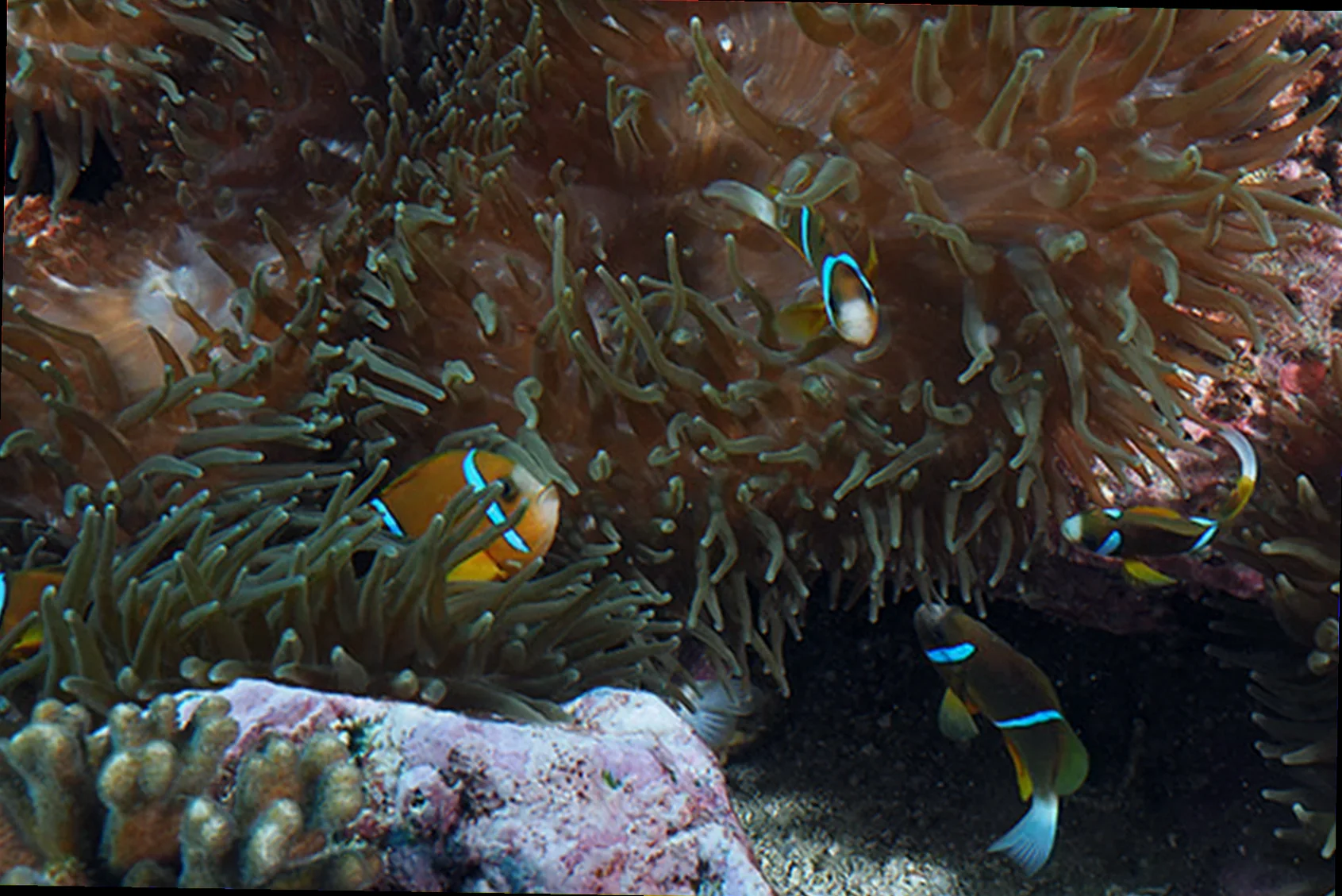
Imagine making your home inside a creature armed with thousands of venomous stingers, not just surviving, but thriving. This incredible feat is the daily reality for the Barrier Reef Anemonefish, a vibrant resident of Australia's coral gardens, including the precious Solitary Islands Marine Park off the coast of New South Wales. But their lives hold more secrets than just immunity to stings - from surprising social structures to ancient connections with the sea Country of Aboriginal Australians, these little fish are far more complex than meets the eye.
Natural History Overview
| Category | Information |
|---|---|
| Scientific name | Amphiprion akindynos |
| Common name variants | Barrier Reef Anemonefish, Yellowtail Anemonefish, Clownfish (general) |
| First described (year) | 1972 by Gerald R. Allen |
| Size and weight | Up to 12 cm in length, typically weighing up to 80g |
| Longevity record | Up to 15 years in the wild, potentially longer in captivity |
What Makes Barrier Reef Anemonefish Habitat Extraordinary
The life of a Barrier Reef Anemonefish is a masterclass in biological adaptation and social dynamics. What truly sets them apart is their extraordinary mutualistic symbiosis with host sea anemones. While most fish would be fatally stung by the anemone's nematocysts (stinging cells), the anemonefish has evolved a remarkable protective mucus layer. This mucus isn't just a physical barrier; it chemically mimics the anemone's own outer coating, effectively tricking the anemone into not recognising the fish as a threat. This allows the fish to live safely amongst the stinging tentacles, gaining protection from predators while providing its host with various benefits, including cleaning, aeration, and even defending it from certain anemone predators. It's a living, breathing, stinging fortress where these colourful fish conduct their entire lives.
Beyond this incredible immunity, their social structure is equally fascinating. Barrier Reef Anemonefish are protandrous hermaphrodites, meaning they all start life as males. Within a single host anemone, a strict hierarchy exists: the largest and most dominant individual is always the female, the second largest is the breeding male, and all smaller individuals are non-breeding males. If the female dies, the breeding male undergoes a sex change, growing larger and transforming into the new female, while the next largest male in the pecking order takes over as the breeding male. This intricate system ensures reproductive continuity and stability within their unique, stinging homes.
Aboriginal and Torres Strait Islander Perspectives
For thousands of generations, Aboriginal and Torres Strait Islander peoples have lived in profound connection with the Australian coastline and its marine ecosystems. The Gumbaynggirr people, Traditional Custodians of the Solitary Islands region, possess deep knowledge of their Sea Country. While anemonefish may not have been a primary food source due to their small size and association with potentially toxic anemones, their presence, and the health of their host anemones, would have been vital indicators of a thriving coral reef system. Indigenous knowledge systems often observe the intricate relationships between species, understanding that the health of one component reflects the health of the whole. The unique symbiosis of the anemonefish and its host anemone would undoubtedly have been noted and understood as part of the interconnected web of marine life, contributing to a rich oral tradition and understanding of the environment. Maintaining healthy reefs, through practices passed down through generations, ensures the continued presence of all reef inhabitants, including these fascinating residents.
Recent Scientific Discoveries (last 20 years)
- Olfactory Impairment (circa 2009-2010): One of the most surprising and concerning discoveries in recent decades is how ocean acidification impacts the Barrier Reef Anemonefish's sense of smell. Research by marine biologists, including Professor Philip Munday, revealed that elevated CO2 levels in the water, mimicking future ocean acidification scenarios, can impair their ability to detect predators or locate suitable host anemones. This means that a crucial survival mechanism, their acute sense of smell, is compromised, potentially making them more vulnerable in a changing ocean.
- Acoustic Communication (circa 2007): Scientists discovered that anemonefish, including species closely related to the Barrier Reef Anemonefish, communicate using sound. They produce various clicks, chirps, and pops, particularly during aggressive encounters, courtship, and when defending their territory or host anemone. This finding added a new layer of complexity to their known behaviours, revealing an underwater soundscape previously unappreciated