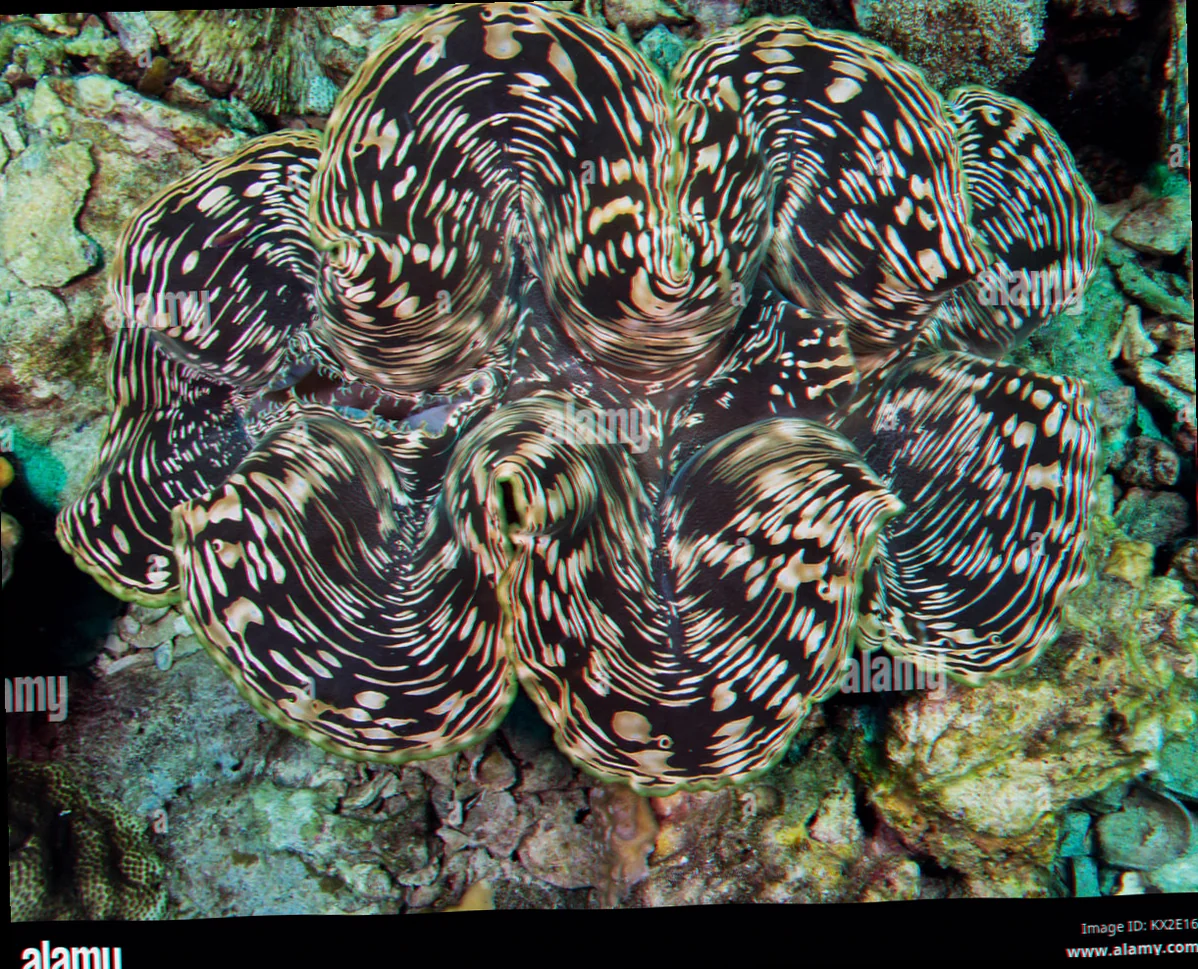
The giant clam mantle is the vibrant, fleshy outer layer surrounding the shell of several species of large marine bivalve molluscs, most notably those in the genus Tridacna. Found in the warm waters of the Indo-Pacific region, including Australia's northern and eastern coastlines, the mantle is crucial for the clam's survival as it contains symbiotic algae that provide the majority of its nutrition. Ecologically, giant clams are ‘reef builders' creating habitat complexity and contributing significantly to coral reef biodiversity, and their mantle displays are vital for attracting these symbiotic algae.
Scientific Classification and Description
Giant clams belong to the family Tridacnidae, known for their massive size and symbiotic relationship with dinoflagellate algae. The full taxonomic classification is as follows: Kingdom → Animalia; Phylum → Mollusca; Class → Bivalvia; Order → Veneroida; Family → Tridacnidae; Genus → Tridacna; Species → varying (e.g., Tridacna gigas, Tridacna maxima). The largest species, Tridacna gigas, can reach over 1.2 metres in length and weigh over 200 kilograms. However, the mantle itself, when fully extended, can span up to 60 centimetres in width in mature individuals of this species. The mantle's colouration is highly variable, ranging from electric blues and greens to vibrant purples and oranges, often displaying intricate patterns.
Identifying Features at a Glance
| Feature | Detail |
|---|---|
| Scientific name | Tridacna gigas (most commonly referred to as the Giant Clam) |
| Size (adult) | Up to 1.2 metres in length, weighing over 200 kg |
| Endemic range | Northern Australia (Western Australia, Northern Territory, Queensland), and the Coral Sea Islands. |
| Conservation status | Vulnerable (IUCN) + Protected under Australian state and territory legislation. |
| Lifespan | Over 100 years in the wild; up to 30 years in captivity. |
Habitat and Distribution in Australia
- Primary biome: Coral reefs and hard substrate environments within the tropical and subtropical marine biome.
- Geographic range: Found along the northern coastline of Australia, from Shark Bay in Western Australia, through the Northern Territory, and along the Great Barrier Reef in Queensland. They are also present on numerous coral reefs in the Coral Sea.
- Microhabitat: Giant clams prefer sheltered reef flats and lagoon environments with clear, shallow water and strong sunlight penetration. They often settle in depressions or amongst coral rubble.
- Altitude / depth range: Typically found between 0 and 30 metres depth, although they can survive down to 50 metres.
- Seasonal movement: Limited seasonal movement, primarily related to spawning events. Clams may slightly shift position to optimise sunlight exposure for their symbiotic algae.
Diet, Hunting, and Feeding Ecology
Giant clams are primarily filter feeders, extracting phytoplankton and organic particles from the water column. However, the majority (up to 90%) of their nutritional needs are met through the symbiotic relationship with dinoflagellate algae (typically Symbiodinium species) residing within their mantle tissue. The mantle's bright colours and patterns attract these algae. A unique foraging behaviour, rarely documented, is the clam's ability to actively ‘pump' water across its mantle surface using rhythmic contractions of its incurrent siphon, even when phytoplankton concentrations are low, effectively creating a localised current to increase feeding efficiency. This pumping action is particularly noticeable during periods of reduced water flow.
Reproduction and Life Cycle
Giant clams are broadcast spawners, releasing both eggs and sperm into the water column for external fertilisation. Spawning typically occurs during the warmer months, specifically between October and December, often synchronised with lunar cycles. A single clam can release millions of eggs and sperm. Fertilised eggs develop into free-swimming larvae (veligers) which drift in the plankton for several weeks, undergoing metamorphosis before settling on a suitable substrate. Juvenile clams grow relatively slowly, reaching sexual maturity after approximately 5-10 years. The lifespan of a giant clam can exceed 100 years, with growth continuing throughout their lives.
Unique Adaptations Exclusive to This Species
- Symbiotic Algae Housing: The mantle tissue contains specialized cells (zooxanthellae) that house symbiotic dinoflagellate algae. These algae photosynthesize, providing the clam with sugars, glycerol, and amino acids, significantly reducing its reliance on filter feeding.
- Mantle Display for Algae Attraction: The vibrant colours and patterns of the mantle are not merely aesthetic; they actively attract Symbiodinium algae spores from the surrounding water, ensuring a continuous supply of symbiotic partners. This is a form of visual signalling unique to these clams.
- Chemosensory Detection of Predators: Giant clams possess chemoreceptors located on their mantle edges that can detect the presence of potential predators, such as the Crown-of-Thorns Starfish. Upon detection, the clam rapidly closes its shell, protecting its vulnerable body.
Threats, Conservation, and Human Interaction
The primary threats to giant clams in Australia include habitat degradation from coastal development and pollution, overharvesting for the shell trade (historically), and the impacts of climate change, particularly coral bleaching events which reduce the availability of suitable habitat. A lesser-known threat is ‘black band disease', a bacterial infection that can rapidly decimate clam populations. The Australian Institute of Marine Science (AIMS) runs a Giant Clam Breeding Program, focused on selectively breeding clams for increased resilience to temperature stress and disease, and restocking depleted reefs. Additionally, many state governments have implemented regulations to protect giant clams from illegal harvesting.
Frequently Asked Questions
Is giant clam mantle venomous or dangerous to humans?
The giant clam mantle is not venomous, but it can deliver a surprisingly strong bite if a person attempts to pry it open or harass the clam. The sharp edges of the shell and the powerful adductor muscles can cause significant lacerations and bruising. While not life-threatening, these injuries can be painful and require medical attention to prevent infection. There have been documented cases of divers requiring stitches after being pinched by a closing giant clam.
Where is the best place in Australia to see giant clam mantle in the wild?
The best locations to observe giant clams in Australia include the Ribbon Reefs and Osprey Reef off the coast of Queensland (accessible via liveaboard dive trips), Heron Island on the Great Barrier Reef, and the waters around the Montebello Islands in Western Australia. These locations offer clear water, healthy coral reefs, and relatively high densities of giant clams.
What is the difference between giant clam mantle and similar species?
While several species of giant clam exist, the most visually distinct difference lies in the mantle patterns and colouration. For example, the Fluted Giant Clam (Tridacna squamosa) often exhibits a more subdued colour palette with prominent, radiating ridges or ‘flutes' on its shell, and its mantle displays are less intensely coloured than those of Tridacna gigas. Furthermore, Tridacna squamosa tends to be found in slightly deeper waters and is less reliant on symbiotic algae, exhibiting a greater degree of filter feeding.