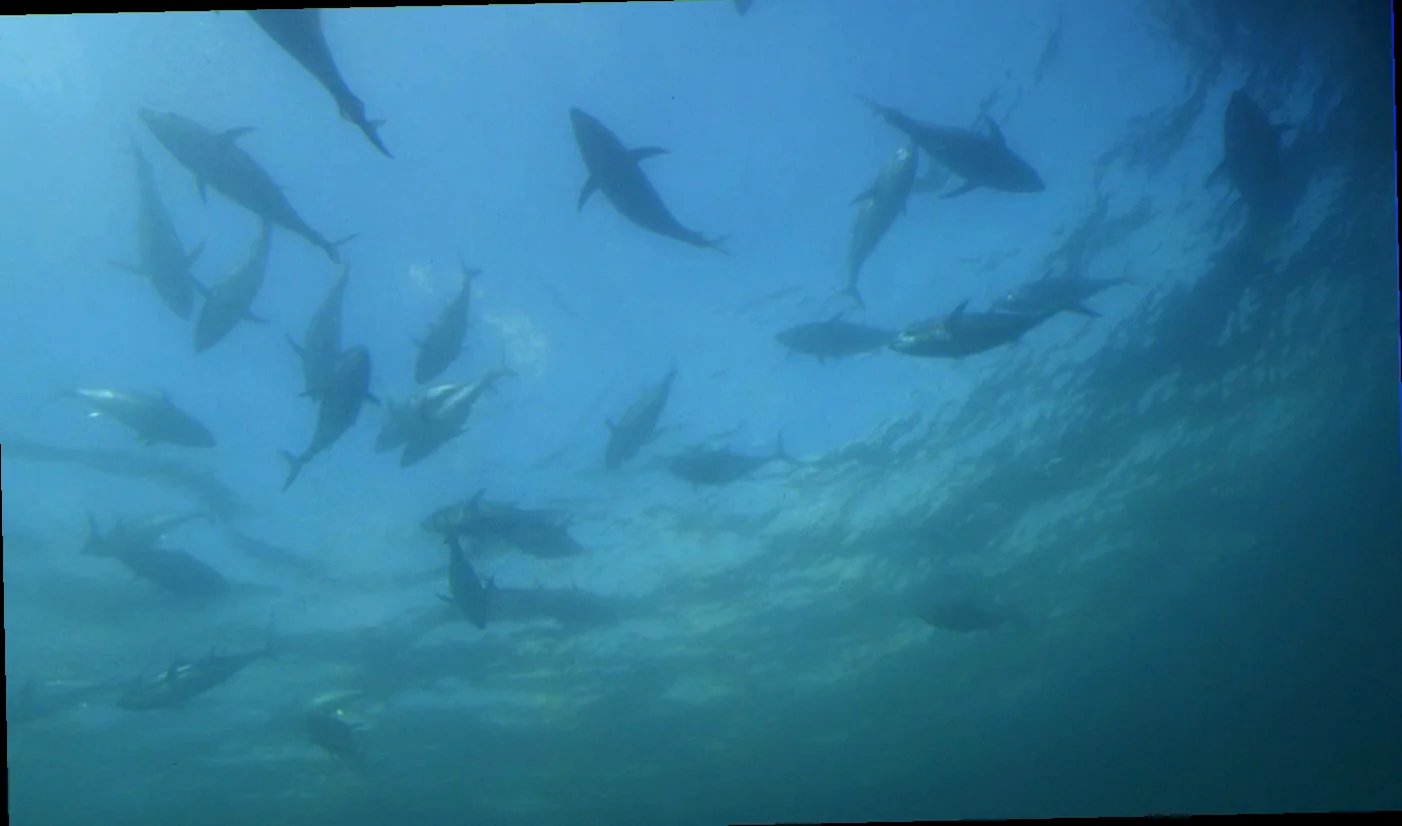
The Southern Bluefin Tuna (Thunnus maccoyii) does not actually spawn in Portland Harbor; instead, this Victorian coastal region serves as one of the world's most significant seasonal feeding grounds and migratory stopovers for juvenile and sub-adult populations. While the species exclusively spawns in the tropical waters of the Indian Ocean, Portland Harbor is ecologically vital as a nutrient-rich "pit stop" where tuna congregate to gorge on baitfish near the continental shelf. This area is essential for the species' growth and the maintenance of the Southern Ocean's apex predatory balance.
Scientific Classification and Description
The Southern Bluefin Tuna is a member of the Scombridae family, a group of highly evolved, fast-swimming pelagic fish. Its full taxonomic hierarchy is: Kingdom Animalia → Phylum Chordata → Class Actinopterygii → Order Perciformes → Family Scombridae → Genus Thunnus → Species Thunnus maccoyii. Physically, the species is built like a hydrodynamic torpedo, featuring a metallic dark blue dorsal surface and silvery-white flanks. They possess a series of small finlets behind the second dorsal and anal fins, which reduce drag. Adults can reach a maximum length of 2.5 metres and weigh up to 260 kilograms, although the specimens typically encountered near Portland Harbor range from 15 kg to 100 kg.
Identifying Features at a Glance
| Feature | Detail |
|---|---|
| Scientific name | Thunnus maccoyii |
| Size (adult) | 1.5 to 2.5 metres; up to 260 kg |
| Endemic range | Circumpolar in the Southern Hemisphere; 30°S to 50°S |
| Conservation status | IUCN: Endangered; Australian EPBC Act: Conservation Dependent |
| Lifespan | Up to 40 years in the wild |
Habitat and Distribution in Australia
- Primary biome: Pelagic marine ecosystem, specifically the temperate and sub-antarctic waters of the Southern Ocean.
- Geographic range: In Australia, they are found from northern New South Wales, around Tasmania, and across the Great Australian Bight to north-western Australia.
- Microhabitat: They prefer the "shelf break," where the relatively shallow coastal waters drop off into the deep ocean, creating upwellings of cold, nutrient-rich water.
- Altitude / depth range: Primarily found in the top 50 metres of the water column, but capable of diving to depths of 2,743 metres.
- Seasonal movement: They follow the Bonney Upwelling, a seasonal surge of cold water along the Victorian and South Australian coastlines, arriving in Portland typically between March and July.
Diet, Hunting, and Feeding Ecology
Southern Bluefin Tuna are opportunistic apex predators. Their diet consists primarily of small pelagic fish such as sardines (Sardinops sagax), anchovies, and blue mackerel, as well as squid and various crustaceans. In the waters surrounding Portland Harbor, they are known to feast heavily on "krill" and small red baitfish. They utilize a high-speed pursuit strategy, often "corralling" schools of fish toward the surface where they can be picked off with surgical precision. A unique ecological fact rarely discussed is their use of a "pineal window"-a small, translucent patch on the top of their heads that allows light to reach the pineal gland. This helps the tuna sense subtle changes in ambient light levels, enabling them to track the vertical migration of prey through the water column even in low-light conditions.
Reproduction and Life Cycle
It is a common misconception that these fish spawn in cool southern waters. In reality, every Southern Bluefin Tuna in existence is born in a single spawning ground located in the north-east Indian Ocean, between the North West Cape of Australia and Java, Indonesia. The breeding season occurs from September to April each year. A single large female can release up to 15 million eggs during a spawning cycle. After hatching, the larvae are carried south by the Leeuwin Current along the Western Australian coast. By the time they reach age 1 or 2, they begin their residency in the Great Australian Bight before migrating eastward toward Portland and Tasmania. They do not reach sexual maturity until they are approximately 10 to 12 years old, at which point they undertake the long journey back to the tropical spawning grounds.
Unique Adaptations Exclusive to This Species
- Regional Endothermy: Unlike most fish, they are "warm-blooded." They possess a complex network of veins and arteries called the rete mirabile, which acts as a counter-current heat exchanger. This allows them to maintain a core body temperature up to 10°C higher than the surrounding water, fueling their high-speed muscles in freezing Antarctic currents.
- Ram Ventilation: This species is an "obligate ram ventilator," meaning it must stay in constant motion to breathe. They lack the muscular pumps to move water over their gills while stationary; if they stop swimming, they suffocate.
- Hydrodynamic Retractable Fins: To minimize turbulence during high-speed sprints, they can fold their first dorsal and pectoral fins into specialized grooves on their body, creating a perfectly smooth surface.
Threats, Conservation, and Human Interaction
The Southern Bluefin Tuna has historically faced extreme pressure from overfishing, leading to a significant decline in the global spawning biomass during the late 20th century. Today, the top three threats are illegal, unreported, and unregulated (IUU) fishing, climate-driven shifts in ocean currents (which alter the path of the Leeuwin Current and the Bonney Upwelling), and plastic ingestion in juvenile feeding grounds. In Australia, the species is managed under strict quotas by the Commission for the Conservation of Southern Bluefin Tuna (CCSBT). The "Tuna Champions" program is a prominent Australian initiative that educates recreational fishers in Portland and beyond on best-practice handling and harvest techniques to ensure the long-term sustainability of the stock.
Frequently Asked Questions
Is southern bluefin tuna spawning areas portland harbor venomous or dangerous to humans?
No, the Southern Bluefin Tuna is not venomous and poses no direct threat to humans in terms of aggression. However, due to their incredible size and speed, they can be dangerous to handle on a boat; a thrashing 100 kg tuna can easily break a person's limb or cause significant blunt-force trauma. From a medical perspective, like many long-lived apex predators, their flesh can accumulate mercury, so consumption should be moderated according to health guidelines.
Where is the best place in Australia to see southern bluefin tuna spawning areas portland harbor in the wild?
The best place to see them "busting" the surface or to interact with the fishery is Portland, Victoria, particularly near the Lawrence Rocks or the "Horse Shoe" section of the continental shelf. Other prime locations include Port MacDonnell in South Australia and the waters off Eaglehawk Neck in Tasmania. During the peak season (May-June), they can often be seen from charter vessels just a few kilometers offshore from the Portland breakwater.
What is the difference between southern bluefin tuna spawning areas portland harbor and similar species?
The Southern Bluefin Tuna (T. maccoyii) is often confused with the Yellowfin Tuna (T. albacares). The most distinct difference is the length of the pectoral fins; in Yellowfin, the pectoral fins are much longer, often reaching past the start of the second dorsal fin. Additionally, the Southern Bluefin has a distinctive yellow tinge on its caudal keels (the small ridges near the tail), whereas the Northern Bluefin has dark or black keels. Most importantly, the Southern Bluefin is the only one of the three bluefin species found in the sub-antarctic waters of the Southern Ocean.