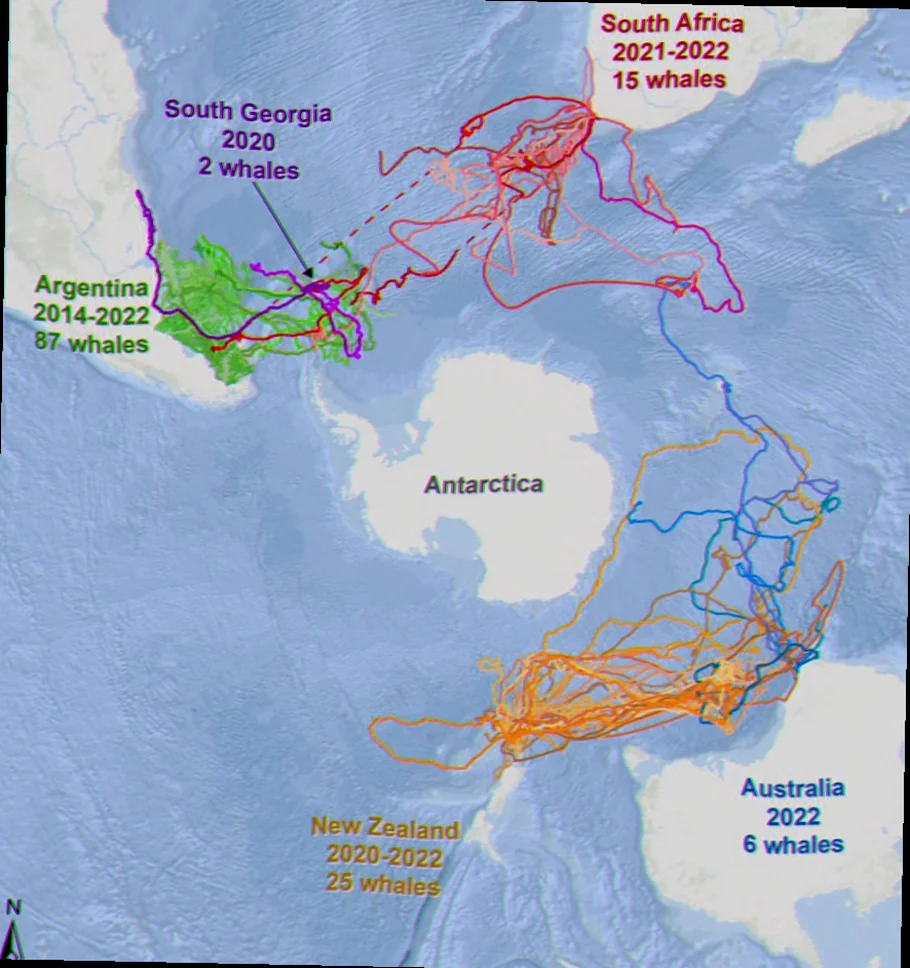
Southern right whale migration in Victoria refers to the annual journey of the *Eubalaena australis* species from their feeding grounds in the Southern Ocean to the sheltered coastal waters of Victoria for breeding and calving. These majestic marine mammals are a vital part of Victoria's coastal ecosystem, with their presence indicating the health of offshore food webs and providing significant opportunities for ecotourism and scientific research.
Scientific Classification and Description
The Southern Right Whale belongs to the baleen whale suborder. Its scientific classification is as follows:
- Kingdom: Animalia
- Phylum: Chordata
- Class: Mammalia
- Order: Cetacea
- Family: Balaenidae
- Genus: *Eubalaena*
- Species: *Eubalaena australis*
Adult Southern Right Whales are massive animals. They typically reach lengths of 15 to 18 metres, with some exceptionally large females recorded up to 19 metres. Their weight can range from 50 to 80 tonnes. They possess a stout, barrel-shaped body, a broad, V-shaped fluke, and exceptionally long, paddle-like pectoral flippers.
Identifying Features at a Glance
| Feature | Detail |
|---|---|
| Scientific name | Eubalaena australis |
| Size (adult) | 15-18 metres; up to 19 metres for females |
| Endemic range | Southern Hemisphere oceans, with significant seasonal presence in Victorian coastal waters, Tasmania, South Australia, and Western Australia. |
| Conservation status | IUCN: Least Concern (globally, though recovering); Australian National Listing: Endangered (as part of the Eastern South Pacific population). |
| Lifespan | Estimated 70-100 years in the wild. No reliable data for captive individuals due to their size and migratory nature. |
Habitat and Distribution in Australia
- Primary biome: Temperate pelagic and coastal marine ecosystems.
- Geographic range: Throughout the Southern Hemisphere, with key Australian aggregation areas including the waters off Victoria, Tasmania, South Australia (especially Head of Bight), and Western Australia (especially near Augusta).
- Microhabitat: During the breeding season, they favour sheltered bays, inlets, and shallow coastal waters with sandy bottoms, such as Portland Bay and Warrnambool Bay in Victoria. These areas offer protection for newborn calves from strong currents and predators.
- Altitude / depth range: Primarily oceanic, typically found in depths of 50 to 200 metres during feeding. During the breeding season, they move into much shallower waters, often less than 20 metres deep.
- Seasonal movement: Undertake a significant annual migration. They move from their summer feeding grounds in the Antarctic and sub-Antarctic waters to warmer, sheltered coastal areas in the austral winter and spring (June to October) to breed and calve.
Diet, Hunting, and Feeding Ecology
The Southern Right Whale is a filter feeder, subsisting almost entirely on dense swarms of small prey. Its diet primarily consists of copepods (tiny crustaceans), particularly Antarctic krill (*Euphausia superba*) and various species of calanoid copepods found in productive Antarctic waters. They also consume small schooling fish and amphipods. Their feeding strategy involves ram filtration, where they swim forward with their mouths open, allowing water to pass through their baleen plates, trapping their prey. A unique foraging behaviour observed, rarely detailed, is their ability to detect and exploit upwellings of nutrient-rich water by subtly altering their swimming depth, a behaviour that requires precise sensory input to navigate and find these often ephemeral food sources.
Reproduction and Life Cycle
The breeding season for Southern Right Whales in Victoria typically occurs between June and October. Mating is thought to occur in the warmer coastal waters where they congregate. Females generally give birth to a single calf every three to four years. The gestation period is approximately 12 months. Newborn calves are about 5 to 6 metres long and weigh around 2 to 3 tonnes at birth. They nurse on their mother's rich milk, which is about 50% fat, for approximately 8 to 12 months. Calves grow rapidly, doubling their birth weight within the first year. Southern Right Whales reach sexual maturity between 8 and 12 years of age, though this can vary between individuals and populations.
Unique Adaptations Exclusive to This Species
- Physiological adaptation 1 with mechanism: Possess extremely thick blubber, up to 50 centimetres in some areas, which provides exceptional insulation in frigid Antarctic waters and also serves as an energy reserve during the non-feeding breeding season.
- Behavioural adaptation 2 with ecological purpose: Their tendency to aggregate in shallow, sheltered bays for calving is a crucial adaptation for calf survival. This reduces the risk of predation from large sharks and minimizes energy expenditure for young, unweaned calves in turbulent offshore waters.
- Sensory adaptation 3: While lacking true echolocation, Southern Right Whales possess a highly developed sense of smell, allowing them to detect prey patches and potentially locate mates over vast distances. They also have excellent vision, important for navigating in clear coastal waters and avoiding near-shore obstacles.
Threats, Conservation, and Human Interaction
Despite their recovery from near extinction due to commercial whaling, Southern Right Whales still face significant threats:
- Ship strikes: Collisions with vessels, particularly in busy shipping lanes and coastal waters, are a major cause of mortality.
- Entanglement in fishing gear: Accidental entanglement in nets and lines from commercial and recreational fishing operations can lead to severe injury, drowning, or starvation.
- Noise pollution: Underwater noise from seismic surveys, shipping, and other human activities can interfere with their communication, navigation, and foraging.
Active Australian conservation programmes include the National Recovery Plan for the Southern Right Whale, which aims to mitigate threats and monitor population trends. Research initiatives, such as those conducted by the Australian Antarctic Division and various university research groups, play a crucial role in understanding their migration patterns, health, and reproductive success.
Frequently Asked Questions
Is southern right whale migration victoria venomous or dangerous to humans?
No, Southern Right Whales are not venomous and are generally not considered dangerous to humans. While they are incredibly powerful animals and should always be observed from a safe and respectful distance, they are placid by nature. Incidents of aggression towards humans are extremely rare. Their primary defence mechanism is to flee or dive, and they pose no direct predatory threat.
Where is the best place in Australia to see southern right whale migration victoria in the wild?
The south coast of Victoria is one of the prime locations for whale watching. Key spots include the Portland Bay area, Logan's Beach near Warrnambool (which has a dedicated whale watching platform), and the Discovery Bay coastline. These areas provide sheltered bays ideal for calving, making sightings during the winter and spring months (June to October) highly probable.
What is the difference between southern right whale migration victoria and similar species?
The Southern Right Whale (*Eubalaena australis*) is often confused with other baleen whales, particularly other right whale species. The most similar species is the North Atlantic Right Whale (*Eubalaena glacialis*) and the North Pacific Right Whale (*Eubalaena japonica*). Key distinguishing features of *Eubalaena australis* include the pattern and distribution of callosities (rough patches of skin) on their heads, which are unique to each individual like a fingerprint. Unlike some other large whales like humpbacks or blue whales, Southern Right Whales have a distinctively broad, V-shaped head and lack a dorsal fin, a characteristic shared with their northern counterparts.